

Friday: One Practical Tip
Most people use AI the same way: type a request, hit enter, hope for the best. The result is usually fine, sometimes useful, and often generic. Then they spend ten minutes editing it into something they'd actually send or post.
Here's a small change that fixes most of that.
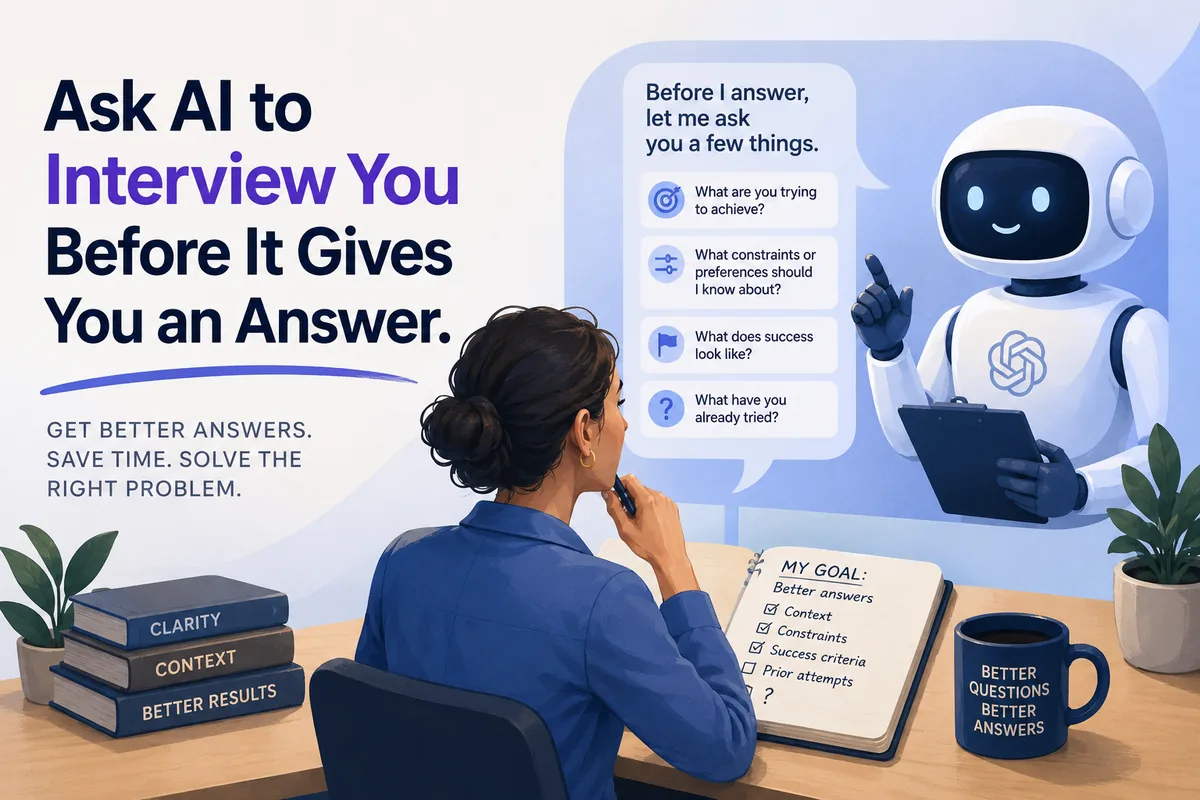
Before you ask AI to do the task, ask it to ask you questions first.
Try this exact line:
"Before you write this, ask me 5–7 questions that would help you do it better."
Answer the questions. Then ask for the output.
Why this works
AI doesn't know your business, your customer, or what you actually want until you tell it. When you skip that step, it falls back on averages: the most common version of whatever you asked for. That's why the first draft so often reads like it was written for somebody else's company.
When you make AI ask first, it has to think about what's missing. The questions surface the details you would have had to add by hand anyway. You answer them once, up front, and the draft comes back specific instead of generic.
What it looks like in practice
Say you're a contractor following up on a quote a customer hasn't responded to. The lazy version:
"Write a follow-up email to a customer about a quote."
You'll get a polite, forgettable "just checking in" email. Not worth sending.
Now try:
"I need to follow up on a quote with a customer. Before you write the email, ask me 5–7 questions you'd want answered to write it well."
AI comes back with something like: What was the project? When did you send the quote? What did the customer hesitate on? Do you have any flexibility on price or timeline? Has anything changed since you sent it? What's your normal tone with customers, formal or casual?
You answer those in 90 seconds. The draft you get back sounds like you, references the real project, and gives the customer a real reason to respond.
The same pattern works for a Facebook post about a sale, a training doc for a new hire, a thank-you email to a referral source, a short blurb for your website, or a job description.
Try it this week
Pick one thing you'd normally have AI write, an email, a post, a short doc, and lead with the interview line. Compare the draft to what you'd usually get.
It's a thirty-second change to how you work that saves time on every project after.
Tri-Cities AI Lab helps small businesses in Kingsport, Johnson City, and Bristol use AI in ways that are private, practical, and built around your workflow. Got a process you'd like to make easier? Get in touch.
Want your whole team asking better questions, not just you? Team Training & Workshops build that skill directly.